

Welcome to The Recovery Papers.
This publication explores recovery as a practical way of understanding ourselves—not just as abstinence from addiction, but as a way of learning to live with it. These papers are not a programme or a set of instructions. They are observations gathered while learning to live with recovery—sometimes practical, sometimes philosophical, sometimes quietly humorous. Each paper begins from the same place: not where we wish we were, not where we used to be, but where we are now. This is where the journey begins.
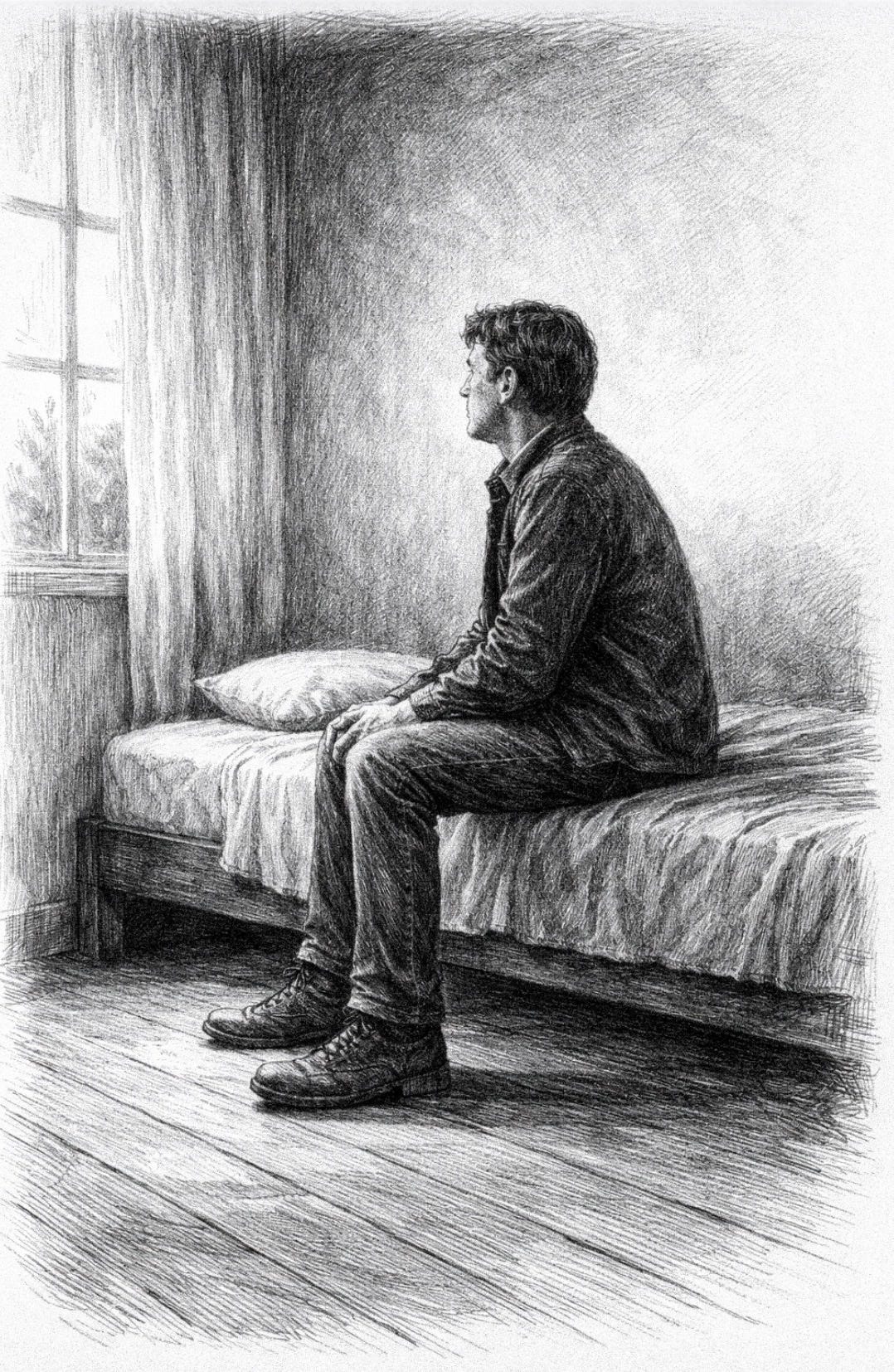
When Other People Became Unavoidable
If there was one thing I was certain of in early recovery, it was that group discussions were not for me.
I was prepared to accept many indignities, but sitting in a circle talking about my feelings with strangers was, in my mind, a step too far. I was clear about this. Explicit. Firm. I believe the phrase “over my dead body” was used more than once.
From the outside, this may have looked like arrogance or denial. From the inside, it felt like self-preservation. I had survived most of my life by thinking, reasoning, and maintaining a certain distance. The idea that recovery would begin by dismantling that distance in public felt not just unhelpful, but faintly ridiculous.
I was wrong. Not heroically wrong. Just plainly, demonstrably wrong.
Talking to other people with the same problem turned out to be a relief — not because they were insightful, articulate, or particularly wise, but because they were recognisable. For the first time in a long while, I was speaking without having to perform competence, intelligence, or control. And just as importantly, I was listening to others do the same.
Something unexpected happened in those rooms. An atmosphere formed that is difficult to describe without sounding sentimental, so I’ll avoid trying too hard. It was not inspirational. It was not warm in a comforting sense. It was closer to an electrical charge — a by-product of shared exposure. People were saying out loud the things they normally kept hidden, and nobody was rushing to tidy it up.
That mattered. Not morally, but mechanically.
Speaking dissolved isolation. Listening dissolved exceptionality. The fantasy that my situation was somehow unique, more complex, or more nuanced than everyone else’s did not survive contact with fifteen variations of the same struggle. Whatever intelligence I brought with me did not disappear, but it stopped being useful as a shield.
With time, I could see how I must have appeared at first: defensive, brittle, and faintly intolerable. I argued points that did not need arguing. I qualified statements that did not require qualification. I defended my resistance with impressive vocabulary and appalling manners. At the time, it felt principled. With distance, it became ridiculous — and eventually, laughable.
That ability to laugh did not arrive immediately. It arrived later, as a side effect of no longer needing to be right.
One-to-one conversations with therapists played a different role. They were useful, but not because they delivered revelations. They functioned as soundboards — places where my thoughts could be heard without being indulged. I was not an easy client. My tendency to intellectualise, contextualise, and reframe was less a defence against truth than a way of postponing it. I could argue myself out of almost anything, including recovery itself.
That, in hindsight, was one of my more refined talents.
What group work did — and what individual therapy quietly supported — was not insight, but containment. I stopped being alone with my own reasoning. I stopped negotiating entirely in my head. The presence of others made certain manoeuvres unavailable. Silence no longer felt dangerous, and speech no longer needed to be strategic.
Nothing was resolved at this stage. No great understanding emerged. But something essential shifted. Recovery, which had stalled completely in isolation, began to move again — socially first, internally much later.
That was not the recovery I wanted.
It was the one that worked.
Containment Before Understanding
In “When Other People Became Unavoidable” was about exposure, this phase was about limitation.
Once the noise of isolation had broken, it became clear that nothing resembling recovery was going to emerge through insight alone. Whatever had brought me this far — intelligence, reasoning, self-knowledge — was no longer reliable. In fact, it was actively unhelpful. Left to its own devices, my thinking did not stabilise me; it negotiated on my behalf.
At this stage, recovery was not about understanding myself better. It was about preventing further damage.
Abstinence, where it applied, was not a moral stance or a declaration of virtue. It was a structural necessity. Certain lines had been crossed, and pretending otherwise only reopened arguments that always ended in the same place. Moderation was not being postponed; it had become irrelevant. The question was no longer how to drink, but how to live without pretending that the old options were still available.
Structure entered quietly. Not insight, not belief — structure.
Days became narrower by design. Routines repeated. Choices reduced. What to do next was often decided in advance, precisely to prevent my internal discussion from restarting. This felt restrictive at first, and not in a romantic way. It was dull. Predictable. Occasionally irritating. But it worked, because irritation was survivable and relapse was not.
Frameworks like AA functioned here not as philosophies, but as stabilisers. Their value lay less in agreement than in consistency. Attendance, repetition, and shared language created an external rhythm that did not depend on how I felt about it on any given day. I did not need to believe everything I heard. I needed to remain inside something that held its shape when mine did not.
This is where many misunderstandings arise. Structure at this stage is often mistaken for obedience, conformity, or abdication of responsibility. In practice, it was the opposite. By removing certain decisions entirely, responsibility became smaller, clearer, and actually manageable. I did not have to decide who I was. I only had to decide what I would not do today.
Insight was deliberately postponed. Not rejected — postponed.
Every instinct I had wanted to understand what was happening, why it had happened, and how it all fitted together. But understanding too early simply gave my thinking more material to work with. Insight arrived dressed as balance, reason, or self-acceptance, and quietly reopened negotiations that structure had just closed.
Discipline mattered more than hope here. Hope flickered. Discipline waited. Discipline did not care how convincing my internal arguments sounded, or how tired I felt of repeating the same actions. It did not negotiate. It simply required compliance — not forever, just today.
Humility entered this way, though it did not feel like humility at the time. It felt like constraint. Looking back, I can see it more clearly. Humility was not an attitude I adopted. It was the by-product of discovering that my preferred tools could no longer be trusted.
Nothing about this phase was inspiring. It did not make me feel wiser, calmer, or more myself. But something crucial was happening underneath the monotony. The internal pressure to explain, justify, or resolve everything began to ease. Not because answers had arrived, but because the constant demand for them had been removed.
This phase did not heal anything.
It held things in place.
And by holding long enough — by narrowing life until it became survivable again — it created the conditions in which understanding could eventually do its work without becoming another escape route.
Demystification and the Return of the Observer
Only once life had been narrowed enough to hold did understanding become safe.
Before that, insight had been unreliable. It did not stabilise anything; it merely gave my internal arguments better language. But with abstinence in place, structure holding steady, and the noise of constant negotiation reduced, something shifted. Thinking slowed. Urgency diminished. For the first time, reflection did not immediately collapse into strategy.
This is where demystification entered — quietly, without fanfare.
Understanding how addiction worked didn’t cure me.
It removed the mystique.
Once it stopped feeling personal and started feeling mechanical, honesty became possible.
By learning to separate functions — chemical dependency, stress response, habit, avoidance, absence — I stopped loading every craving or relapse with meaning. The drama drained away. What had previously felt like moral failure or existential flaw began to look like a system responding predictably under certain conditions.
That shift created distance. Not distance from responsibility, but distance from self-attack. I could observe what was happening without immediately judging it, defending it, or trying to outthink it. Addiction was no longer something I was. It was something that operated — and like any mechanism, it could be interrupted, respected, and accounted for.
This was the return of the Observer.
That observing position had existed before, but it had been drowned out by urgency and shame. Now it could hold its ground. Thoughts appeared, but they did not require immediate response. Sensations rose and fell without being interpreted as instructions. The compulsion to explain myself — to myself — loosened its grip.
Meditation began to work at this point, though not in the way I had once imagined. It did not produce insight or peace. It simply allowed me to remain present without intervening. Over time, I could sense a stable point of awareness — an I that existed regardless of what I was feeling or thinking in any given moment. Not an identity. Not a story. Just a place from which observation was possible.
From there, self-respect emerged naturally. Not as affirmation or self-love, but as restraint. If I could see the machinery clearly, I could stop feeding it unnecessarily. Certain choices no longer felt tempting because they no longer felt ambiguous. Respect followed clarity.
Relapse, when it occurred, took on a different meaning here. It was neither catastrophe nor proof of failure. It was information. A reminder of boundaries. A confirmation that certain mechanisms had not disappeared, only gone quiet. That knowledge was sobering, but also oddly relieving. The goal was no longer to defeat addiction, but to live accurately in relation to it.
Demystification did not make recovery easier.
It made it simpler.
And in that simplicity, something important returned — not control, not certainty, but orientation. I knew where I was again. I could begin from there, rather than constantly trying to escape it.
That was the real gift of understanding.
Not answers, but bearings.
Real Recovery: Maintenance, Relapse, Reality
This is the point where many recovery stories quietly lose their footing.
Once the crisis phase passes and the machinery becomes familiar, there’s a temptation to look for a conclusion — a moment where the problem is declared solved and vigilance can be retired. My experience did not support that idea. What it supported instead was something less dramatic and more durable: maintenance.
Maintenance is not heroic. It does not feel like progress. It feels like living.
What changed over time was not the underlying reality of addiction, but my relationship to it. The demystification described earlier did not fade; it deepened. Because I could see the mechanisms clearly, fewer situations felt ambiguous. Fewer decisions required interpretation. That alone reduced friction. And with less friction, there were fewer moments where relapse even presented itself as an option.
Relapses did occur early on. They were not frequent, but they were instructive. Each one confirmed something important: this was not finished, and it never would be in the way I once hoped. Certain lines do not move. That fact was neither depressing nor threatening once it was fully accepted. It was simply information.
Over time, those relapses became rarer. Not through force or vigilance, but through irrelevance. The conditions under which they had occurred were recognised earlier and avoided more naturally. What once required conscious restraint gradually required none. Eventually, relapse stopped appearing at all — not because it had been defeated, but because the pathways that led there were no longer being activated.
That absence was quiet. It arrived without announcement. I noticed it only in retrospect.
This is where maintenance differs fundamentally from early recovery. In the beginning, effort is visible and deliberate. Later on, what matters is not effort, but accuracy. Living in a way that does not constantly provoke old mechanisms turns out to be far more effective than battling them head-on.
Maintenance also meant accepting that recovery does not advance in a straight line. There are periods of consolidation, periods of subtle drift, and moments that require recalibration. None of these indicate failure. They indicate attention. The skill here is not intensity, but honesty — recognising small deviations early rather than dramatising them late.
Importantly, maintenance did not mean living cautiously or narrowly. On the contrary, it allowed life to expand again. Work, relationships, curiosity, and inner life all regained complexity precisely because they were no longer organised around avoidance. Recovery stopped being the foreground and became part of the background — present, relevant, but not dominating.
What remained was a form of ongoing care. Not fear-driven vigilance, and not complacency either. Just a steady respect for what I know about myself and how I function. That respect did more to preserve recovery than any rule ever could.
If there is a lesson here, it is this:
recovery matures when it becomes less about resisting temptation and more about living in ways that make temptation unnecessary.
That is not a finish line.
It is a way of staying oriented over time.
Living With Recovery (Not Under It)
At some point, without a clear marker, recovery stopped being something I did and became something I lived with.
That shift matters. Because recovery that remains a project forever eventually becomes exhausting. And exhaustion, as I learned the hard way, is fertile ground for bad ideas. What changed was not commitment or discipline, but proportion. Recovery moved from the centre of the room to its proper place — close enough to be consulted, far enough not to dominate.
It became a companion. Not an overseer.
I didn’t outgrow recovery, and I didn’t leave it behind. But I stopped organising my identity around it. It no longer needed defending, performing, or reinforcing through repetition. It was simply present — informing decisions, shaping attention, and quietly vetoing choices that no longer made sense.
This is where the raised eyebrow proved essential.
Without it, recovery risks turning solemn. Earnest. Slightly self-important. Those are dangerous qualities. Anything that cannot tolerate humour eventually demands loyalty instead. I had already learned where that road leads. Being able to look back at my earlier behaviour — the brittle certainty, the argumentative posture, the spoiled-brat insistence on exceptionalism — and laugh without contempt was not regression. It was freedom.
That freedom opened space.
Recovery, when it stopped being a defensive posture, became a source of insight rather than a constraint. It sharpened attention. It deepened inner life. It made silence intelligible instead of threatening. The same sensitivity that once fuelled escape now fuelled curiosity. Where alcohol had flattened experience, recovery textured it.
Importantly, recovery did not harden into something rigid. It did not become an oak — immovable, solemn, casting a long shadow over everything else. It behaved more like a companion that adapts to terrain. Sometimes closer. Sometimes further away. Always available, never demanding.
I could travel. I could explore ideas. I could think freely again — not recklessly, but without fear that thought itself was dangerous. The observer remained present, not as a guard, but as a reference point. When something felt off, I noticed earlier. When it felt right, I trusted it more.
Recovery did not promise contentment. It offered something better: orientation. A way of living that did not require numbing, performance, or constant self-negotiation. A way of staying awake without being on edge.
If there is a conclusion here, it is a modest one.
Recovery is not a destination.
It is not an identity.
It is not a monument.
At its best, it becomes a quiet, durable relationship with reality — one that allows life to expand without drifting, deepen without collapsing, and remain interesting without becoming dangerous.
That has been enough.
More than enough.
About the Pseudonym
The author writes under a pseudonym and has lived experience of addiction recovery, together with professional experience supporting people in recovery. The publication deliberately separates the author's personal identity from their professional role in order to protect privacy, professional boundaries and confidentiality.